
Find Divorce Records in Kaneohe
Kaneohe divorce records are handled by the First Circuit Family Court, which serves all of O'ahu including the Windward communities. If you need to search for a divorce case, get a copy of a final decree, or find out where to file, this page covers what Kaneohe residents need to know. You can search case records online through eCourt Kokua at no charge, or visit the Kaneohe District Court to use a public access terminal in person. Filings are processed at the family court complex in Kapolei, not at the local Kaneohe courthouse.
Kaneohe Overview
Where Kaneohe Divorce Cases Are Filed
Kaneohe is part of Honolulu County, so all divorce filings go through the First Circuit Family Court. The family court complex is in Kapolei on the west side of O'ahu. That is where new cases are filed, hearings are held, and judges sign final decrees. Kaneohe residents do not file at the local district court on Pookela Street.
The First Circuit handles family court matters for the entire island, including the Windward side where Kaneohe sits. You can mail documents to the Punchbowl Street address in downtown Honolulu or bring them in person to Kapolei. Both options work, but in-person filing at Kapolei lets you get a file-stamped copy the same day. If you are not sure which address to use, call the court before you go.
| Office | First Circuit Family Court |
|---|---|
| Filing Address | Kapolei Judiciary Complex 4675 Kapolei Parkway Kapolei, HI 96707 |
| Mail Address | First Circuit Court – Family Division 777 Punchbowl Street Honolulu, HI 96813 |
| Phone | (808) 954-8000 |
Note: Bring a valid photo ID to the courthouse and allow time to pass through security at the entrance.
Using the Kaneohe District Court for Records
The Kaneohe District Court on Pookela Street does not handle divorce filings. But it does have public access terminals in the lobby that let you search and view First Circuit case records through eCourt Kokua. For Kaneohe residents who want to avoid the drive to Kapolei or downtown Honolulu, this is a useful option.
Terminals are located in the main entrance lobby on the right side before the security station. You can search divorce cases by party name or case number, view docket entries, and in many cases download PDF copies of filed documents. If you can't find a case online or the documents are not available in PDF format, call ahead at (808) 534-6300 before making the trip. Staff can let you know if the records you need are available at that terminal or if you will need to contact the family court directly.
| Office | Kaneohe District Court (Abner Paki Hale) |
|---|---|
| Address | 45-939 Pookela Street Kaneohe, HI 96744 |
| Phone | (808) 534-6300 |
| Hours | Monday through Friday, 8:00 AM to 4:00 PM |
| Terminals | Main entrance lobby, right side before security |
Search Kaneohe Divorce Records Online
The Hawaii State Judiciary runs an online case search tool called eCourt Kokua. It is free to use and covers all First Circuit cases, including divorce and family court matters filed on O'ahu. You can access it from any device without setting up an account.
When you open the search tool, select "O'ahu - First Circuit Family Court" from the court dropdown. Then search by the name of either spouse or by the case number if you have it. Results show party names, case status, filing dates, and docket entries. For cases where documents are available in PDF, you can download them for $3 per document. Not every case has documents online. Older cases and some sealed records may not appear. If a search turns up nothing, the case might still exist in paper form at the courthouse.
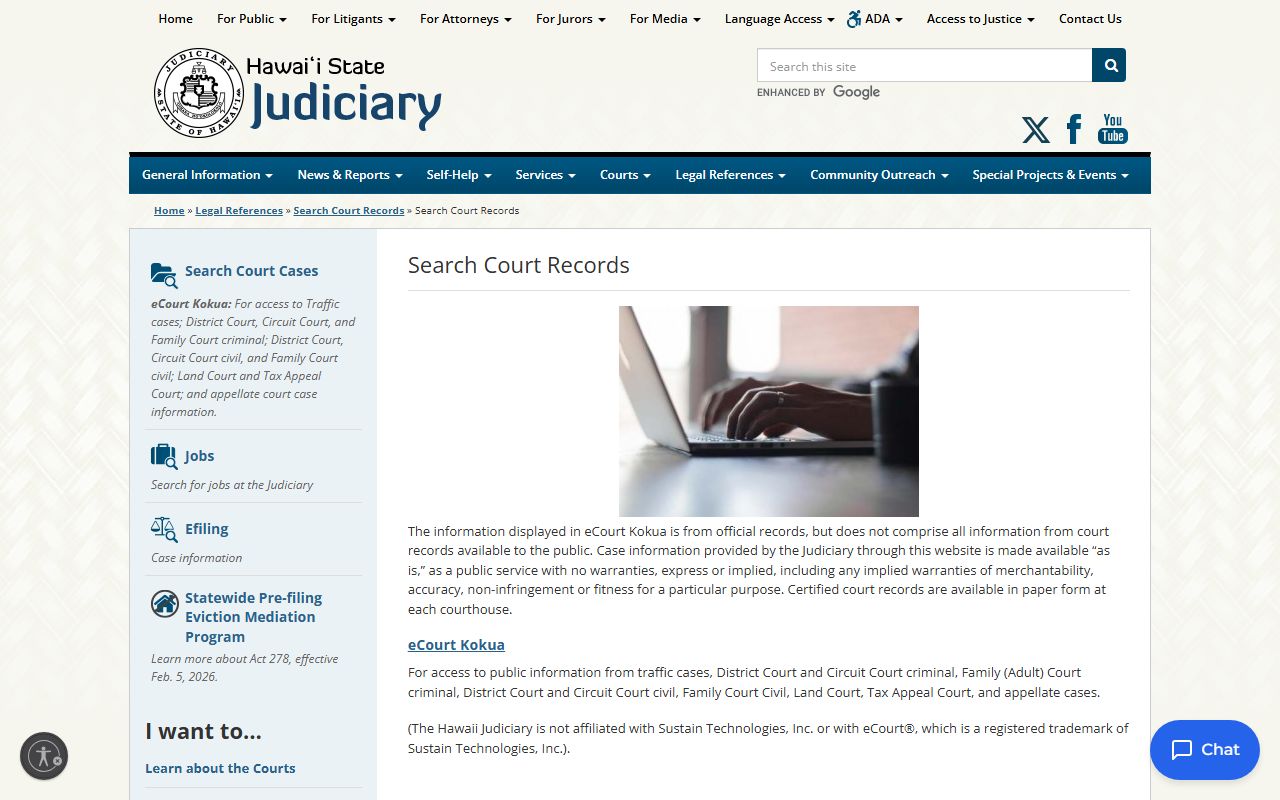
The eCourt Kokua portal is the fastest way to look up a First Circuit divorce case from Kaneohe. You can search party names, pull docket entries, and download documents for a small fee without leaving home.
You can also request court records directly through the First Circuit's records request page. That page explains what forms to use, how to submit a request, and what fees apply. Certified copies and plain copies have separate fee schedules.
Note: The court's public access terminal page lists all O'ahu locations where you can view case files in person, including the Kaneohe District Court.
Divorce Filing Fees for Kaneohe Residents
Filing fees for a First Circuit divorce are $215 for cases without children and $265 for cases that involve minor children. These are set by the Hawaii Judiciary and apply to all O'ahu filings, including those from Kaneohe.
Copy fees are separate. A name search costs $5. Plain copies are $1 per page. Certified copies cost $2 plus $1 per page. If you need an official certified copy of a divorce decree for legal or financial purposes, the certified rate applies. Staff at the courthouse can tell you the exact page count before you pay.
If you can't afford the filing fee, you may be able to request a waiver. The court has a process for people who qualify based on income or government assistance. Ask the clerk's office about the fee waiver form when you call or visit. Fees are subject to change, so confirm current amounts before you go.
Residency Rules and Grounds for Divorce
To file for divorce in O'ahu's First Circuit, at least one spouse must have lived on O'ahu for three months and in Hawaii for six months before filing. This applies to Kaneohe residents the same as it does to anyone else on the island. If you just moved here, you may need to wait before you can file.
Hawaii uses a no-fault divorce system under HRS §580-41. You do not need to prove that either spouse did something wrong. The court can grant a divorce when the marriage is irretrievably broken. The judge looks at whether the marriage is over as a practical matter, not at fault or blame. That said, each spouse still has to disclose assets and debts honestly, and any custody or support terms must be fair to both parties and to the children.
Jurisdiction over divorce cases in Hawaii is governed by HRS §580-1. Property division in contested cases follows equitable distribution rules under HRS §580-47, which gives the court discretion across 13 factors when dividing assets. Courts are not required to split things 50/50. The goal is a fair outcome based on the full picture of the marriage.
Automatic temporary restraining orders also apply in Hawaii divorce cases under HRS §580-10.5. These orders go into effect when a case is filed and prevent either party from moving assets, canceling insurance, or taking children out of state without court approval.
Filing on Your Own in Kaneohe
Many Kaneohe residents handle their own divorce without a lawyer. This works best when both spouses agree on the main issues and there are no complex property or custody disputes. The court cannot give legal advice, but it does offer tools to help people who are filing on their own.
The Hawaii Judiciary's self-help divorce page is a good place to start. It explains the steps, links to required forms, and covers what to expect at each stage. First Circuit forms for O'ahu cases are available at the family court forms page. You will need the petition, financial disclosures, and if kids are involved, a parenting plan.
If children are part of your case, Hawaii requires parents to complete the Kids First program before the court will finalize the divorce. Kids First Hawaii runs this mandatory education course. You can reach them at (808) 954-8280 to register. The class covers how to help children through the divorce process and what courts expect from parents when it comes to co-parenting.
Vital Records and Historical Divorce Files
The Hawaii Department of Health kept a separate index of divorce records from 1951 through early 2026. That database has since been closed to new entries, but records from that period may still be available. You can check what is available at the DOH vital records page or search online through VitalRec.ehawaii.gov. These records show that a divorce was granted but do not include full case documents.
For historical divorce records going further back, the Hawaii State Archives holds First Circuit case files from 1848 through 1892. These are organized under microfilm series MFL 51. The archives serve genealogists, legal historians, and family researchers who need records that predate modern court systems. Their genealogy research guide for divorce case files explains how to access them and what information those old records contain.
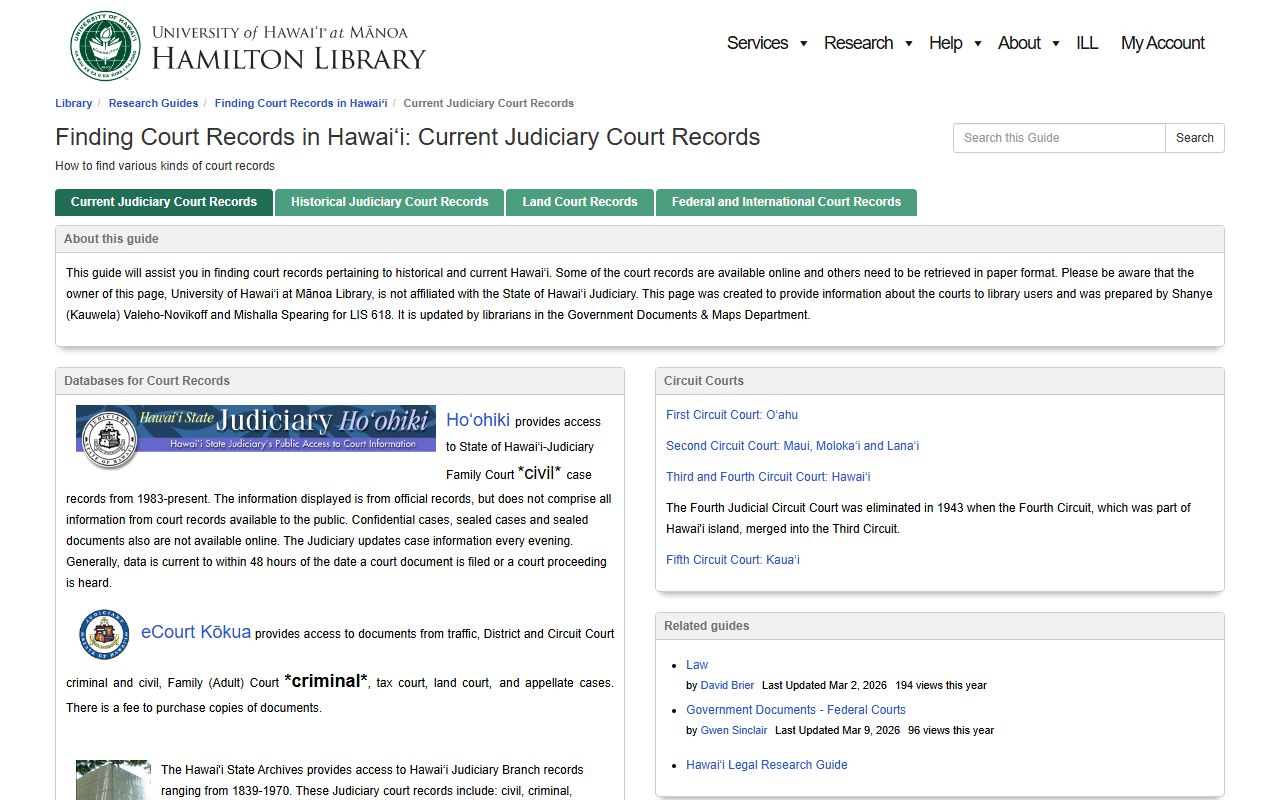
The University of Hawaii library guide to Hawaii courts is a helpful resource for anyone researching older divorce records. It covers court structure, record types, and where to find historical case files across all circuits.
Legal Help for Kaneohe Residents
If you need help with a divorce case and can't afford a private attorney, Legal Aid Society of Hawaii covers O'ahu and may be able to help. Their website at legalaidhawaii.org has information on eligibility and how to apply for services. They handle family law matters for people who qualify based on income.
For research help, the UH Manoa library's Hawaii courts guide lists court structure, statute references, and links to public records resources across the state. It is open to the public and does not require a library account to browse online.
The court's own self-help center is another option. Staff there cannot give legal advice, but they can help you find the right forms and explain the filing process. If your case involves complex finances, property disputes, or custody issues, getting at least a consultation with a family law attorney is worth the cost. The First Circuit's self-help resources are listed at the judiciary divorce self-help page.
Note: The Kaneohe District Court cannot provide family law assistance, but its phone line at (808) 534-6300 can direct you to the right First Circuit contact for your question.
Honolulu County Divorce Records
Kaneohe is in Honolulu County, and the First Circuit Family Court handles all divorce cases for the county, including the Windward side of O'ahu. For more on the county court system, fees, and access options, see the Honolulu County divorce records page.
Nearby Cities
These cities are near Kaneohe on O'ahu. All divorce filings on the island go through the same First Circuit Family Court.